Language learning, the human way
How do people really learn languages?
I've spent the last 30 years testing that question in classrooms, through technology, and by swimming in seven languages myself.
The best method is the one that lowers confusion, creates a quick first win, and gives learners enough confidence to come back tomorrow. Swim In is my current answer.
TESOL Denver, 2009
The tools have changed. My philosophy hasn't.
At TESOL Denver, I talked with TOEFL TV about complete language training. A lot of useful technology has emerged since then, but the core idea still holds: learners need input, output, language focus, and fluency.
Output
Language Focus
Fluency
TOEFL TV Studio, TESOL 2009 Conference in Denver.
Credibility
Thirty years in classrooms, curriculum, technology, and seven languages as a learner.
First Win
Learners understand something useful before they are asked to perform.
Less Friction
Hints, audio, pace control, and native-language support keep learners oriented.
Better Odds
The same useful language returns through short, varied practice until it feels usable.
01
Intro Screen
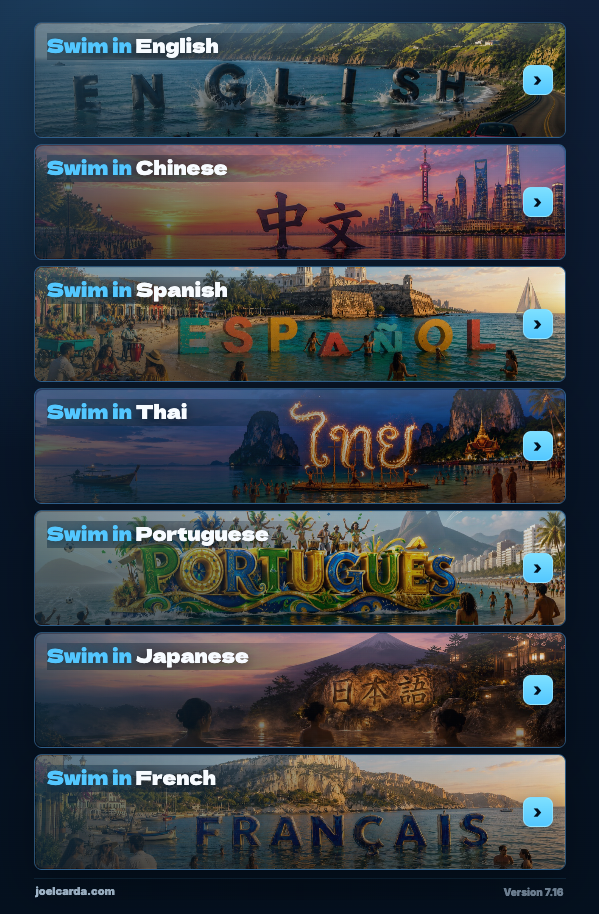
7 languages available.
Choose A Language
Seven languages are available now. The first step should feel immediate, not like paperwork.
02
Main Hub
Choose the path.
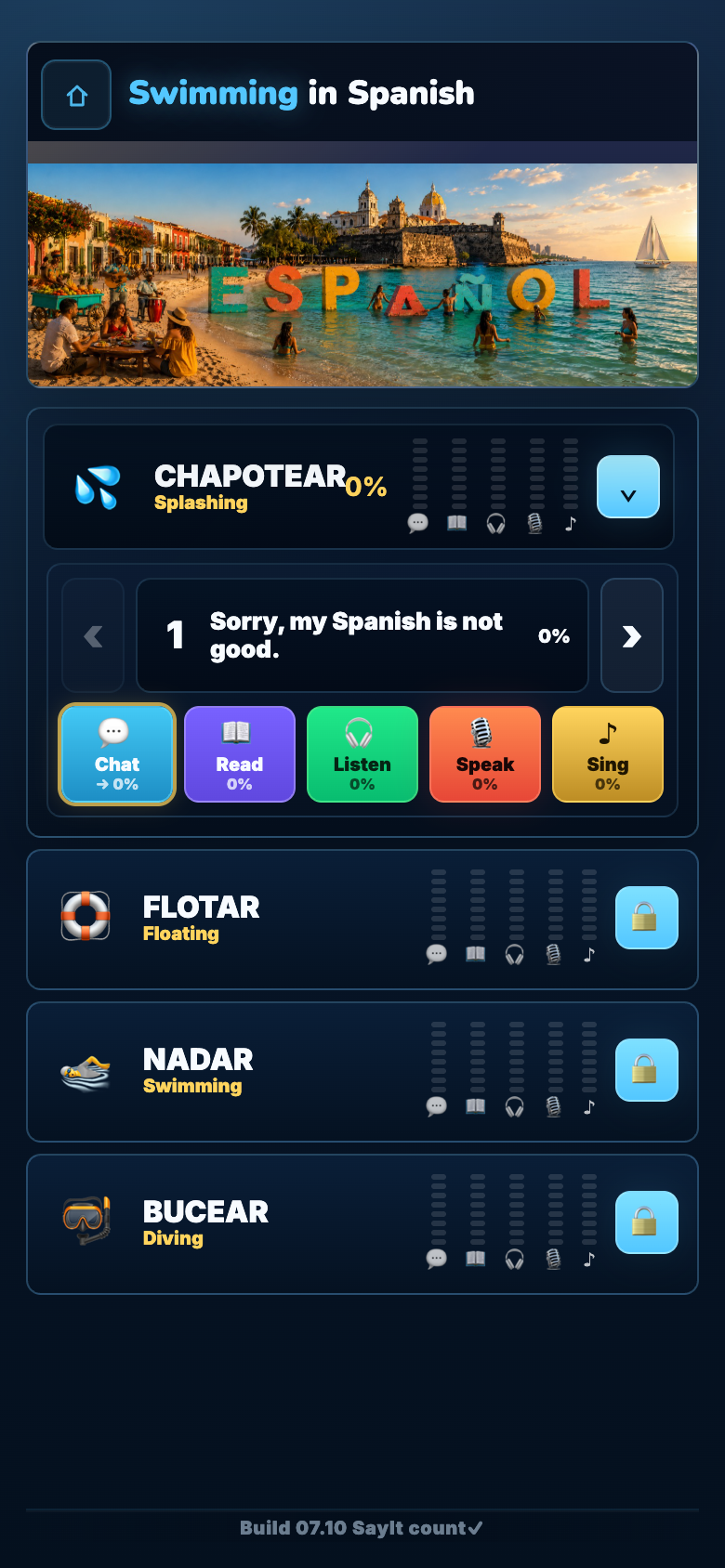
Main Hub
A clear path lowers the guesswork. Learners can see the next step without being managed by a teacher.
03
Read
Start with meaning.
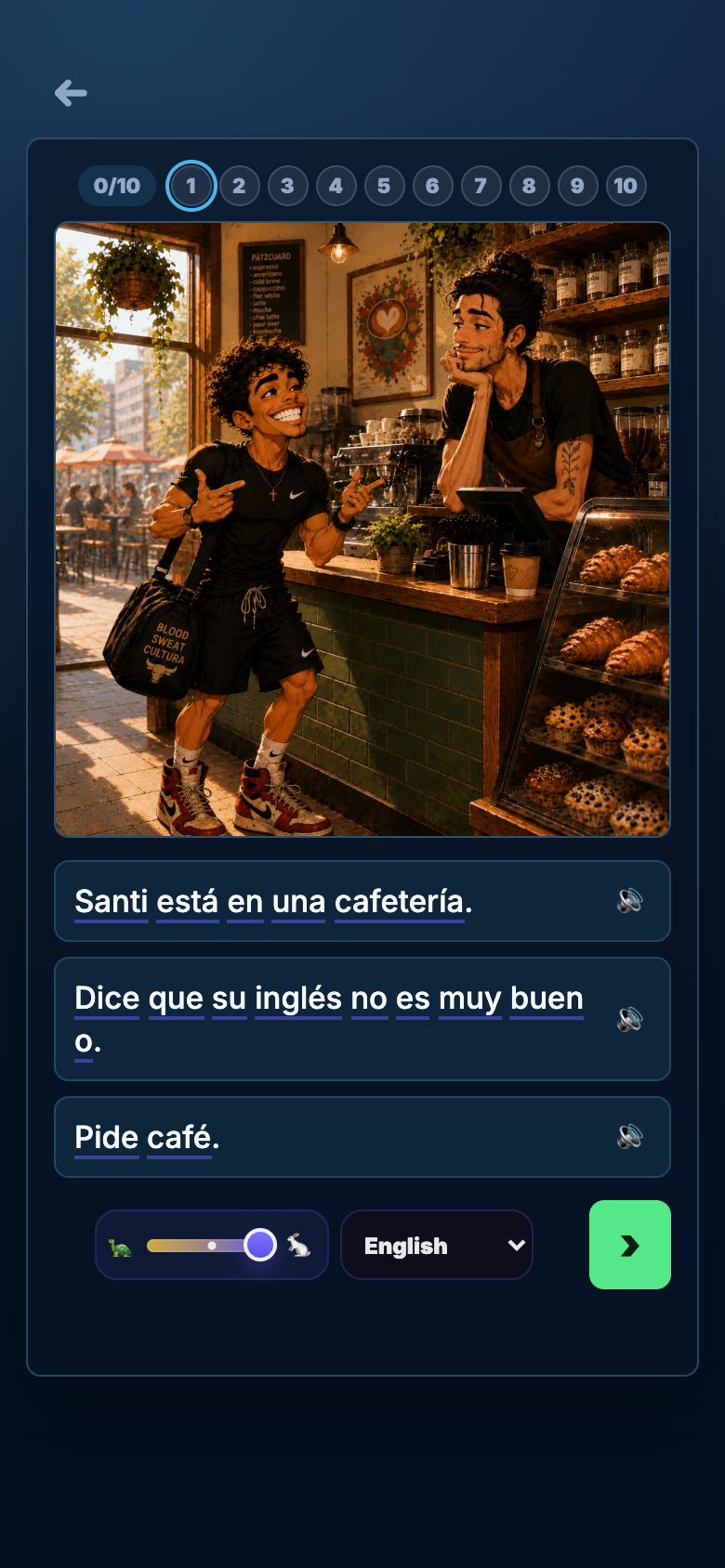
Read With Support
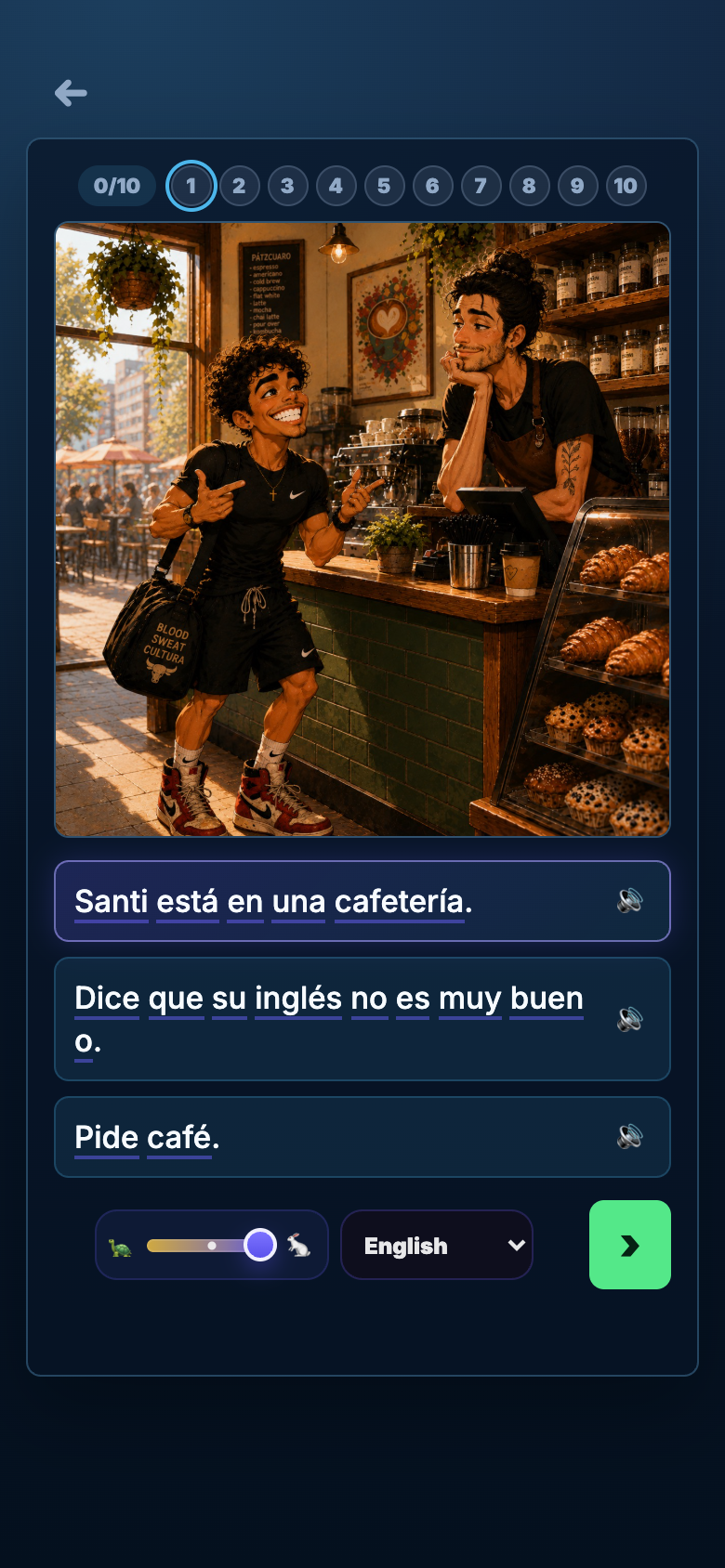
The first win is understanding. Images, audio, questions, hints, and native-language support make that win more likely.
04
Listen
Hear it again.
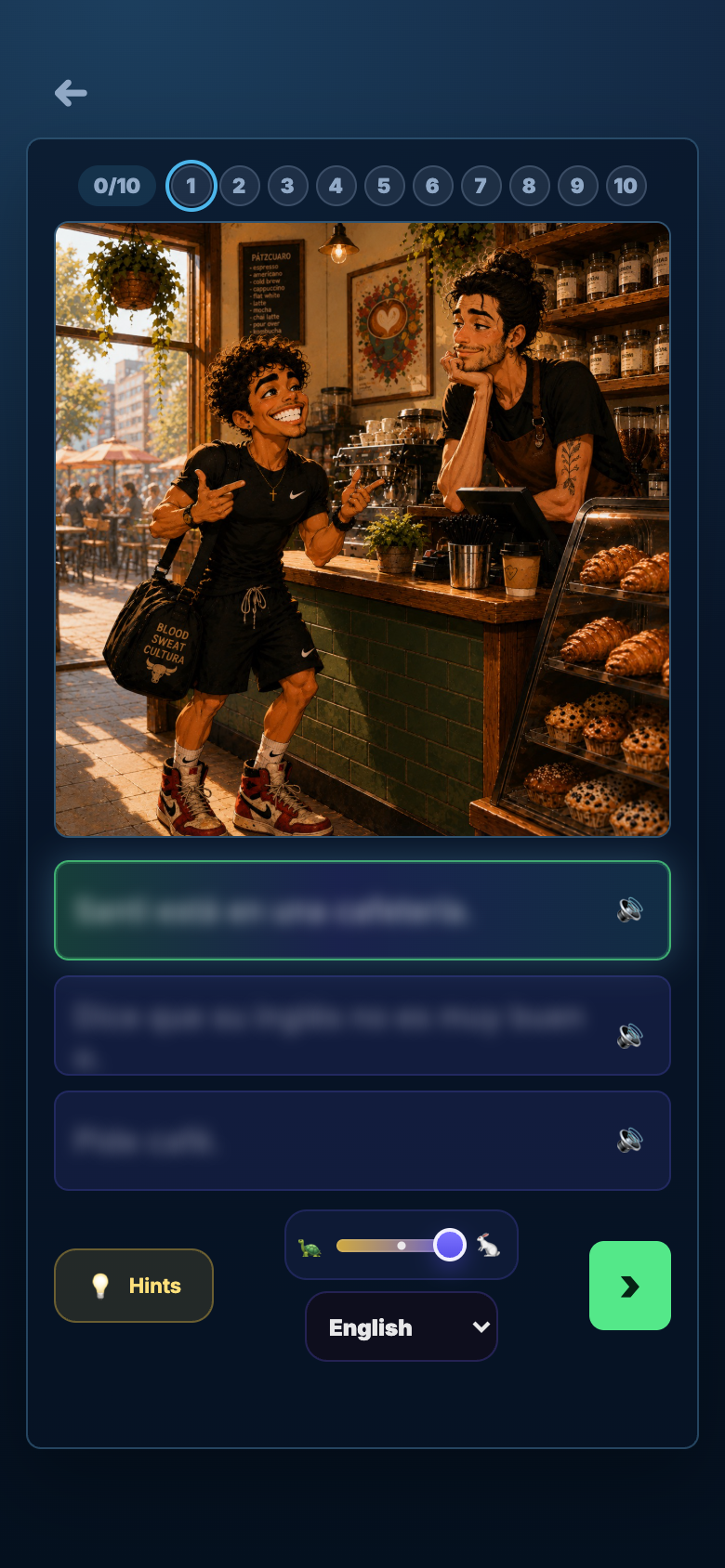
Listen Again
Once meaning is familiar, the text fades back. Listening stops feeling like a test.
05
Speak
Move into output.
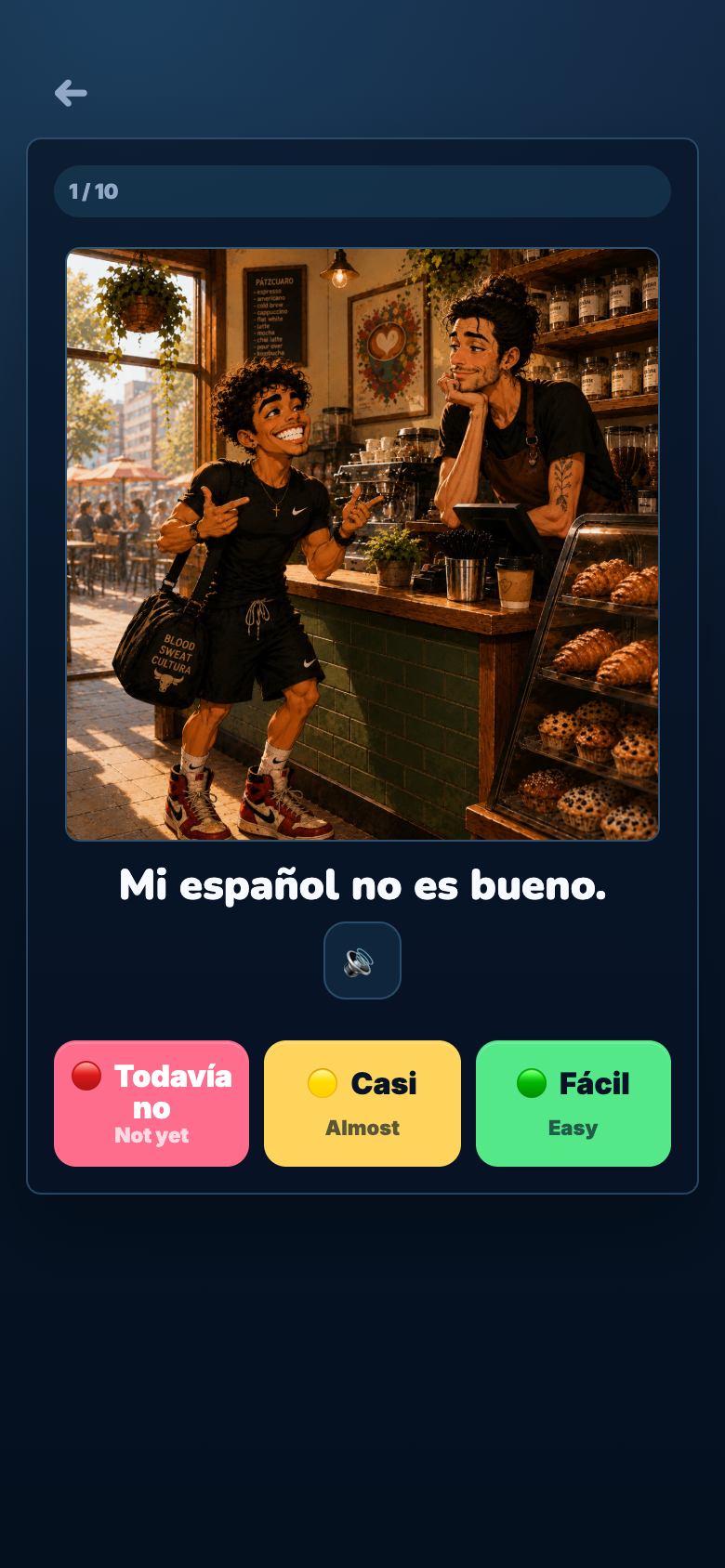
Speak
Output comes after support. Learners retrieve useful phrases out loud without making the moment high-stakes.
06
Say It
Solo or teams.
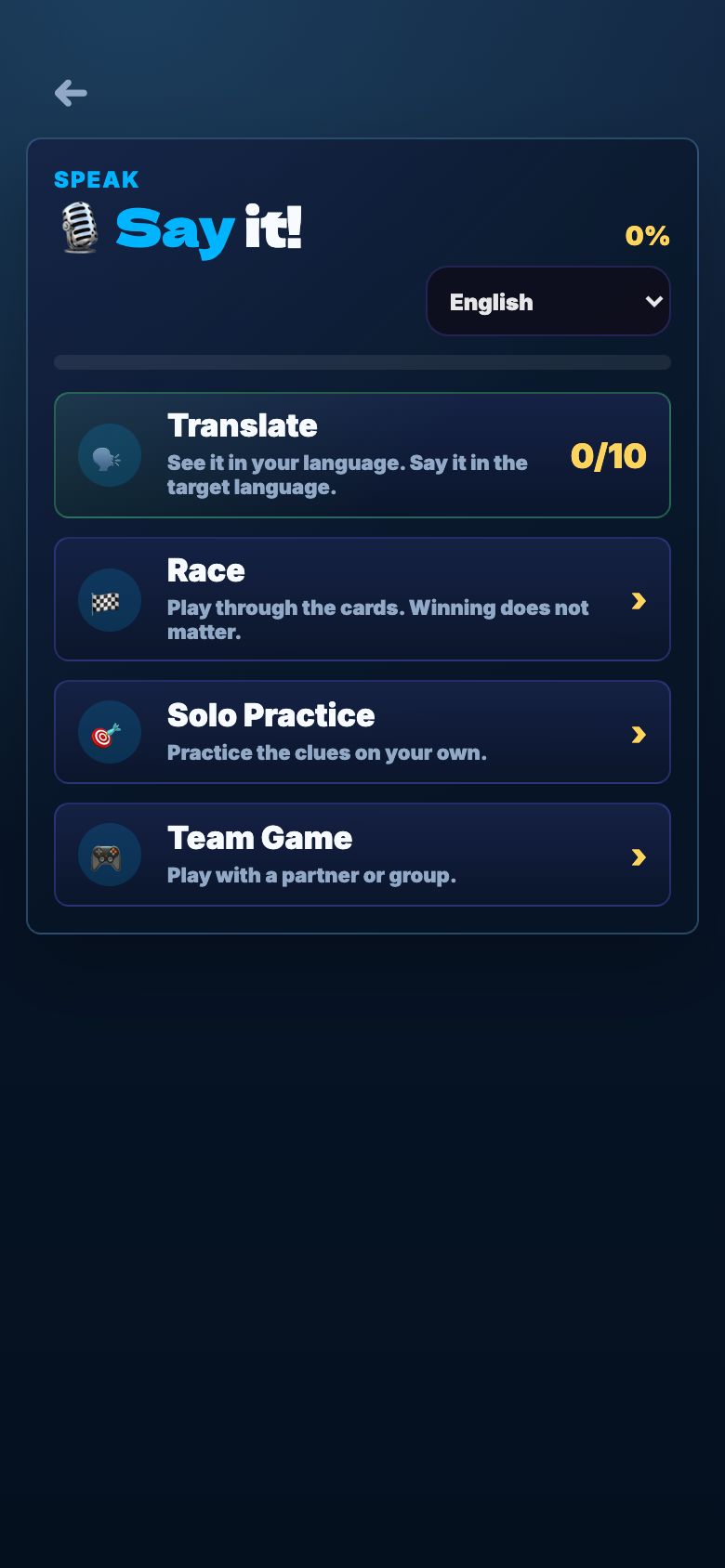
Say It
A speaking game that works alone, with a partner, or with teams, with enough help for beginners to join in.
07
Raining Words
Catch the song.
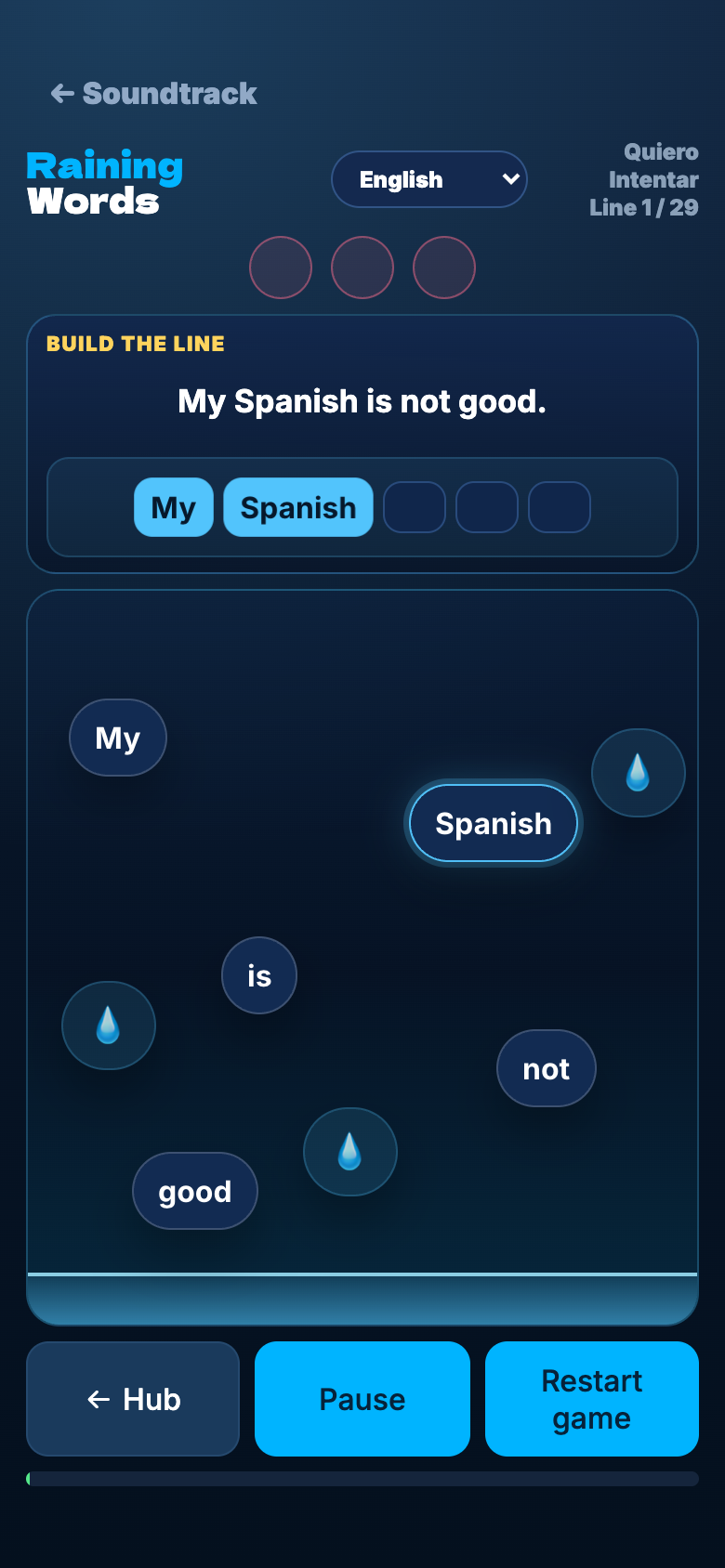
Raining Words
Fast recognition practice helps learners catch language in motion, not just study isolated words.
08
Sing
Let repetition carry feeling.
Sing
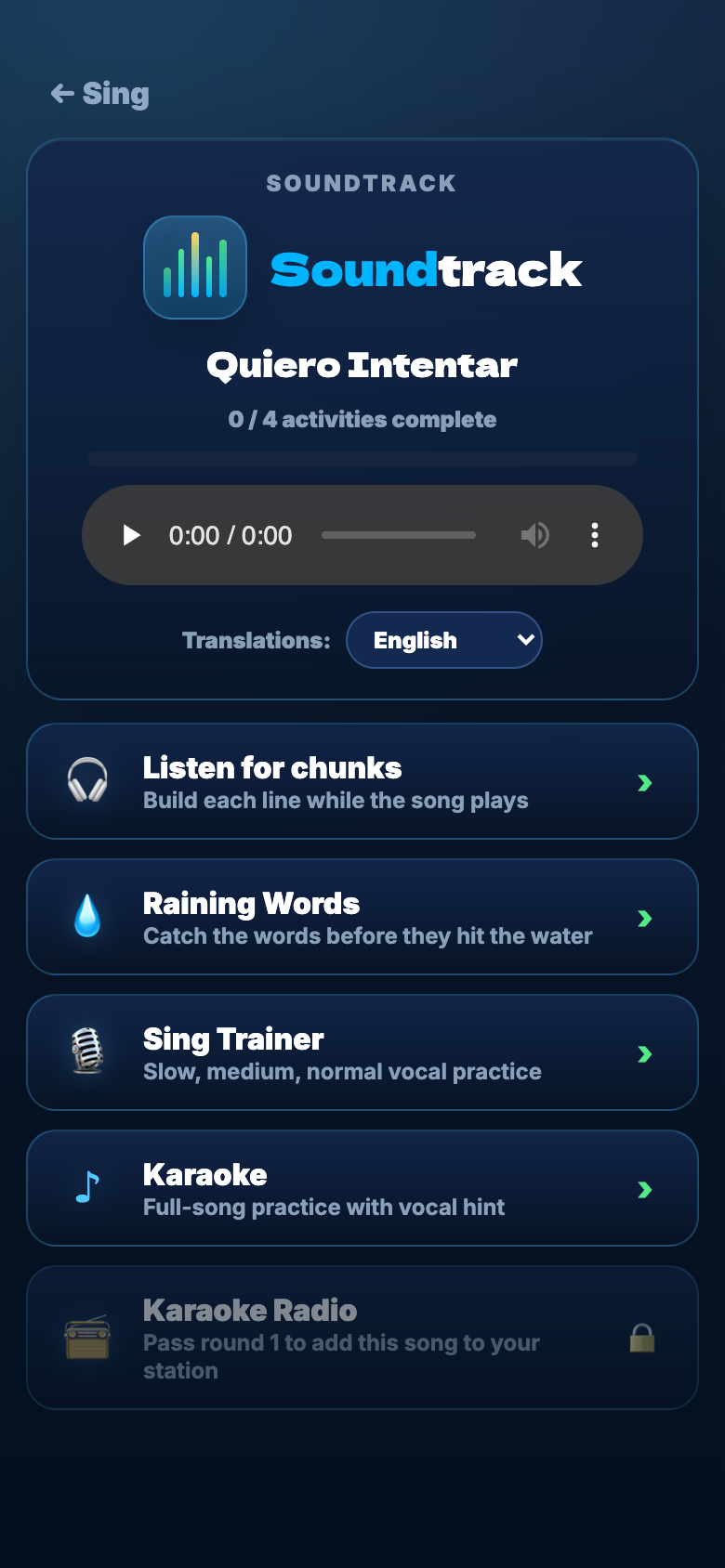
Rhythm gives repetition a pulse. Pronunciation and memory practice feel less forced.
Games
The Social Element

The Social Element
I built these games and have tested them in classrooms and with family. They are still beta versions, but the idea is simple: clear tasks lower the pressure to speak.
- Music games
- Solo games
- Partner games
- Group games
- Karaoke
- Conversation support
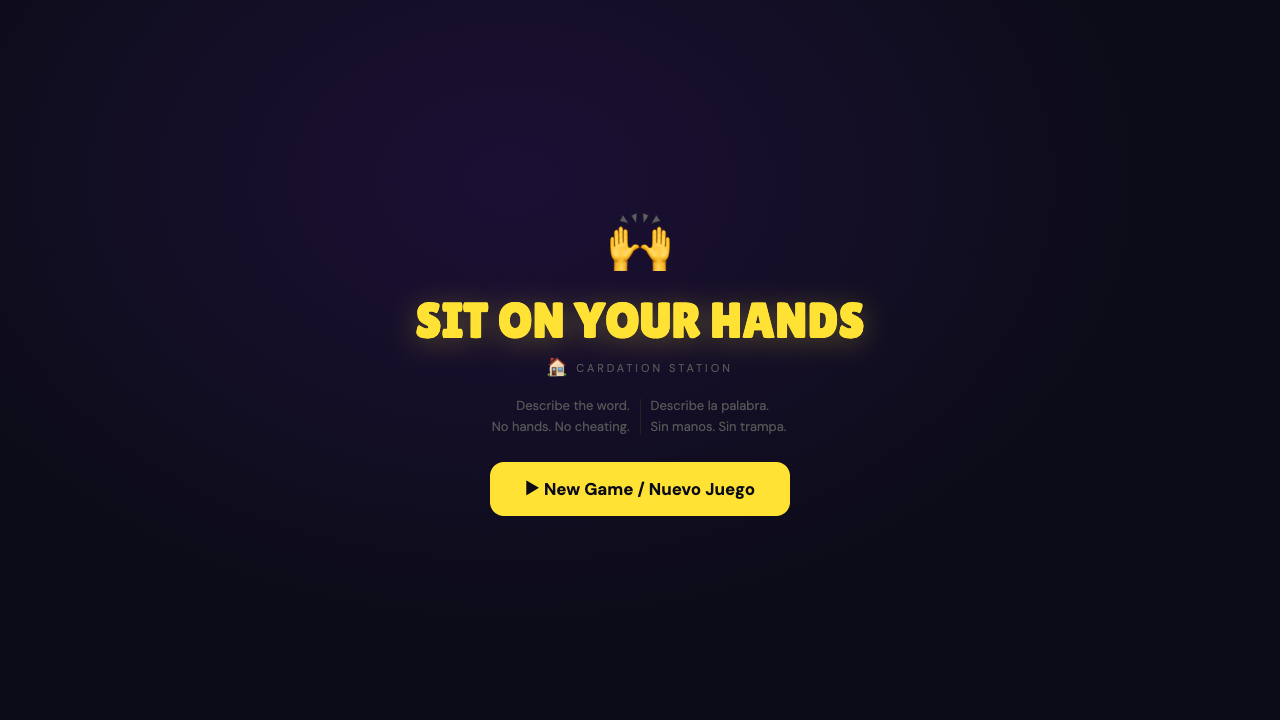
Sit On Your Hands
Describe the word without gestures. Learners practice explaining and paraphrasing when the obvious shortcuts are gone.
Try the game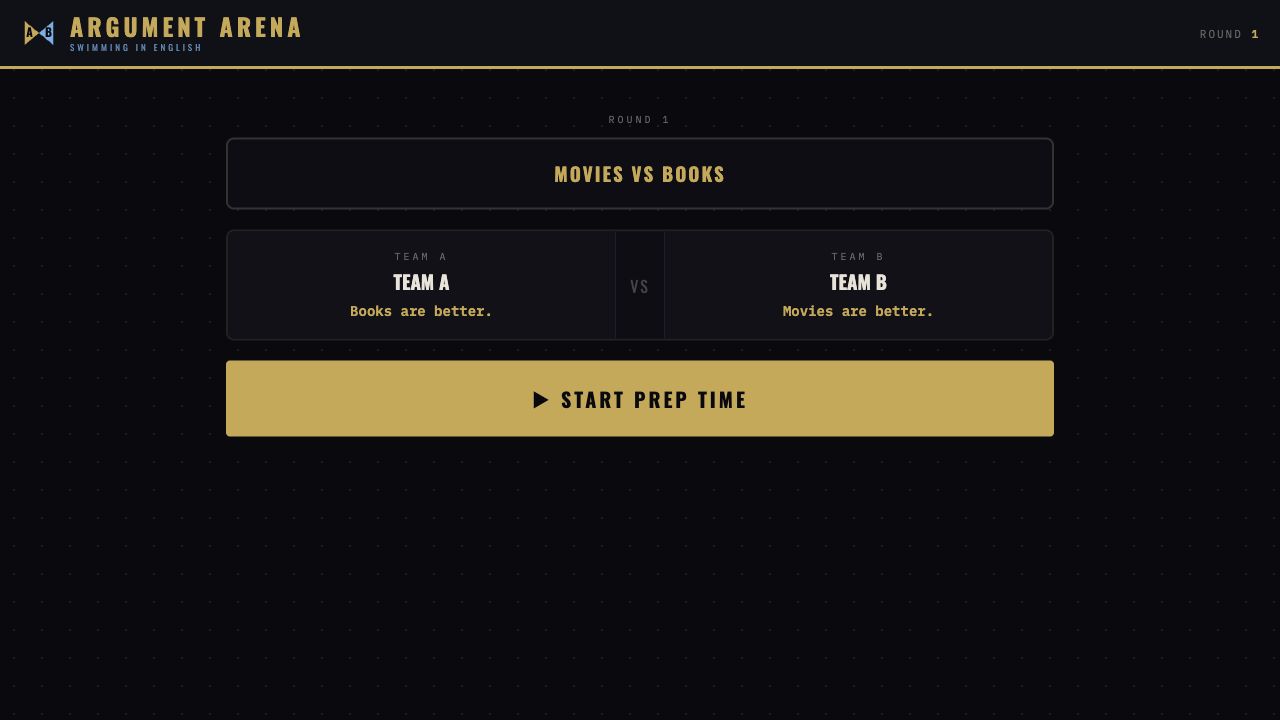
Argument Arena
Teams take a side, prepare quickly, and practice giving reasons.
Try the game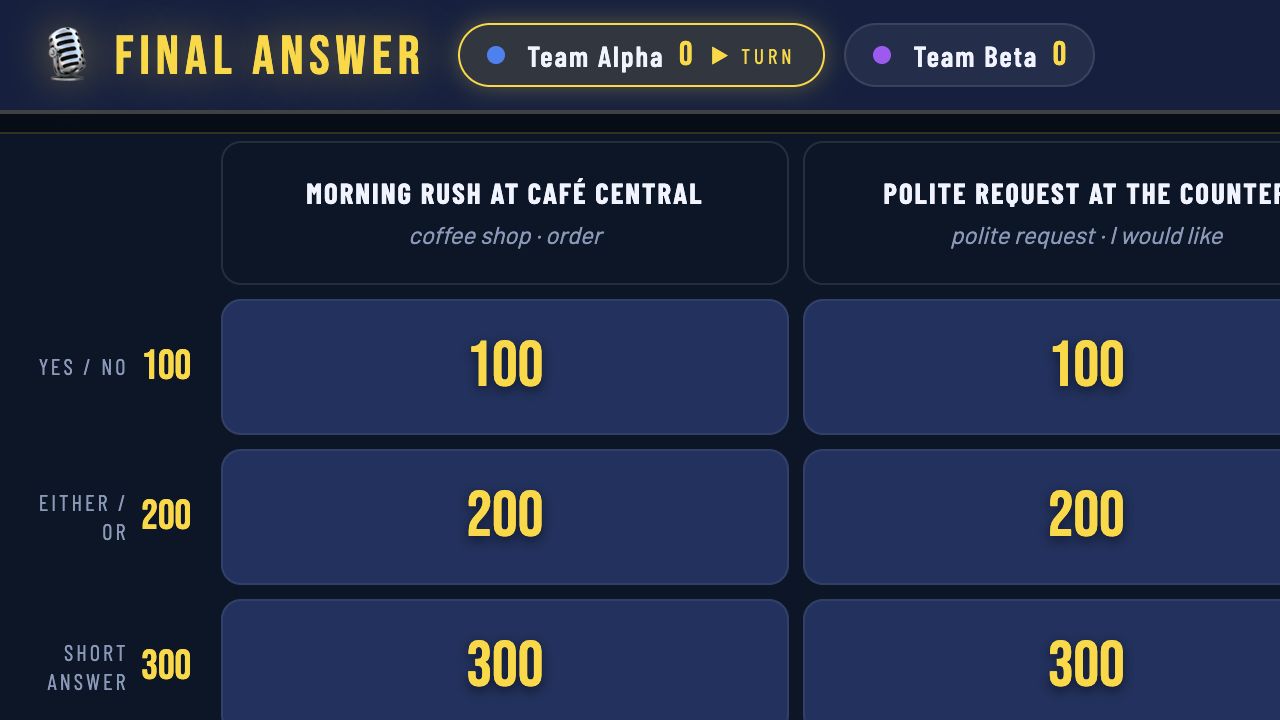
Final Answer
A can-do challenge board that moves learners from quick answers toward fuller responses.
Try the game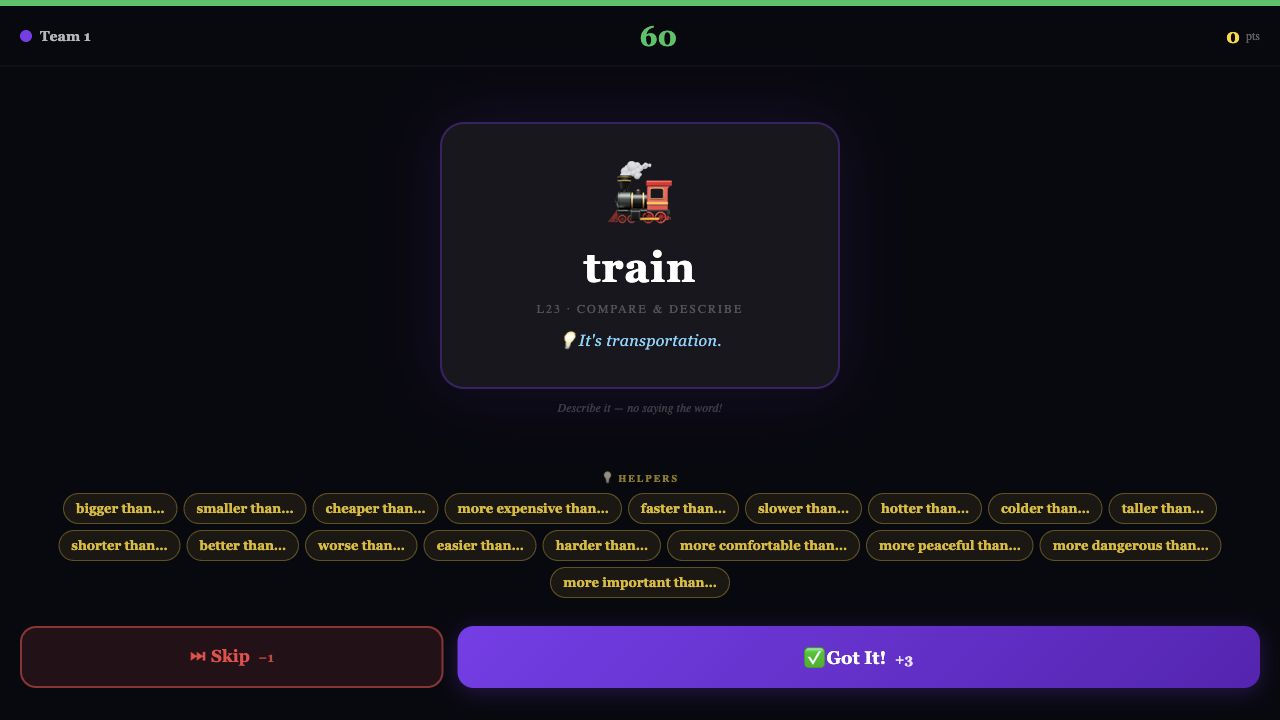
Say It!
A clue-giving speaking game for solo, partner, or team practice.
Try the gameResume & Contact
Language learning strategy for products, classrooms, and multilingual learners.
My background connects classroom teaching, curriculum leadership, educational technology, multilingual learner support, and Swim In.
I am most useful where language learning philosophy has to become something people can actually use: a product flow, a curriculum sequence, a teacher tool, or a workshop that helps a team see the learning problem more clearly.
Language Product Strategy
Learning loops, onboarding, scaffolding, motivation, retrieval, and the small choices that raise the odds of success.
Curriculum And Teacher Tools
Materials and systems for multilingual learners, ESL / CLDE teams, supported language teaching, and practical classroom implementation.
Speaking And Workshops
Thoughtful sessions on how people really learn languages, what technology can support, and how to reduce friction without lowering standards.