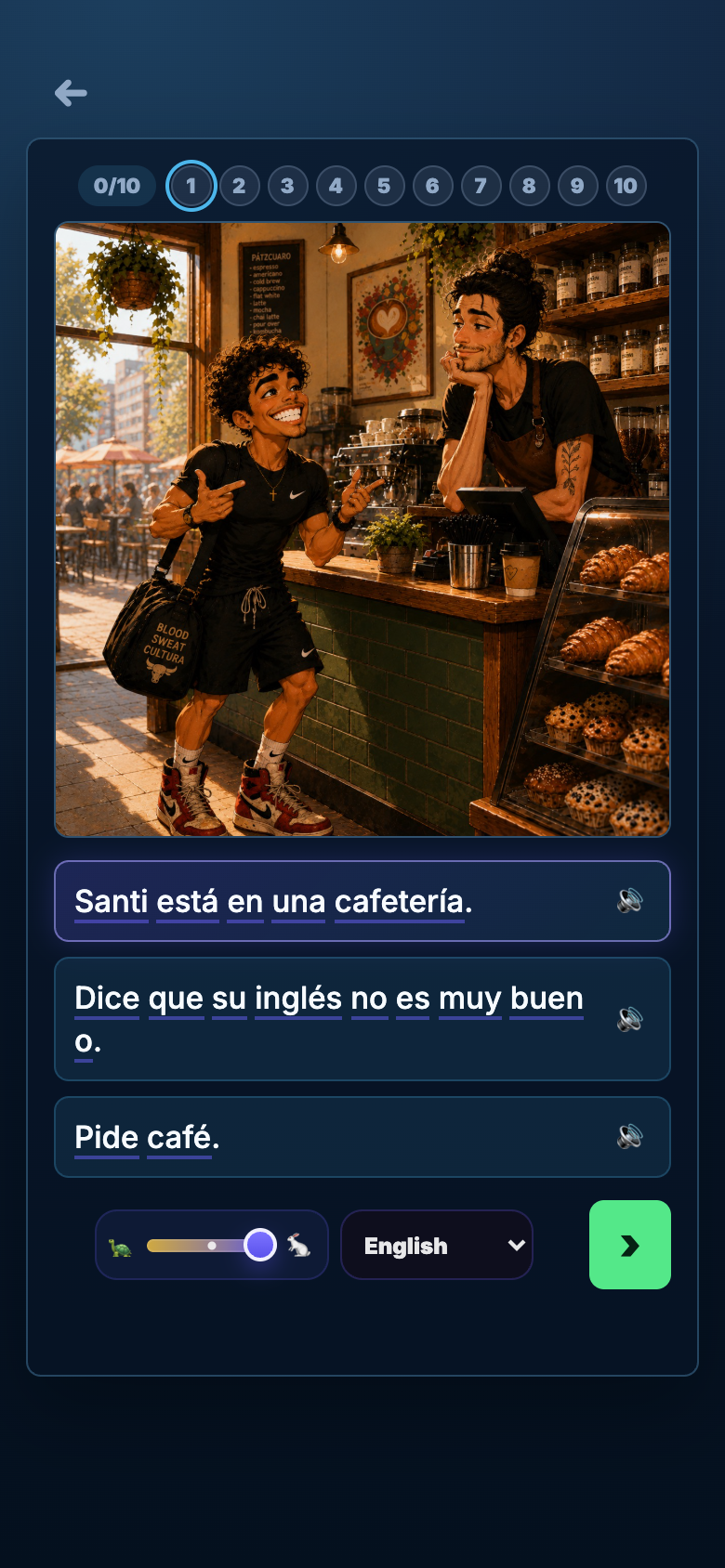
Meaning First
The first win is understanding. Visuals, audio, questions, hints, and native-language support make that win more likely.
Swim In
A quick first win, enough support to keep going, and repeated practice that starts to feel usable.
A Quick Look
The first win is understanding. Visuals, audio, questions, hints, and native-language support make that win more likely.
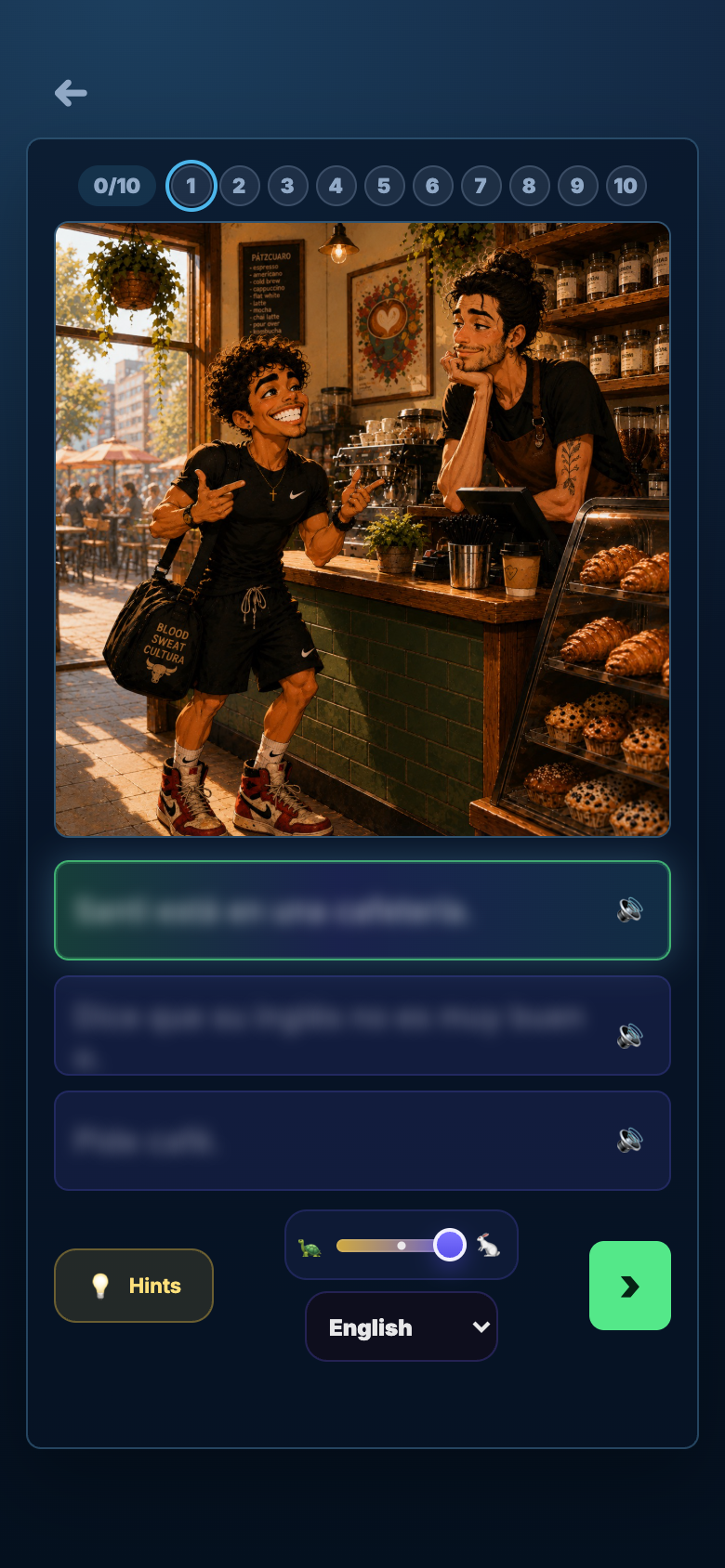
Once meaning is familiar, the text fades back. Listening stops feeling like a test.
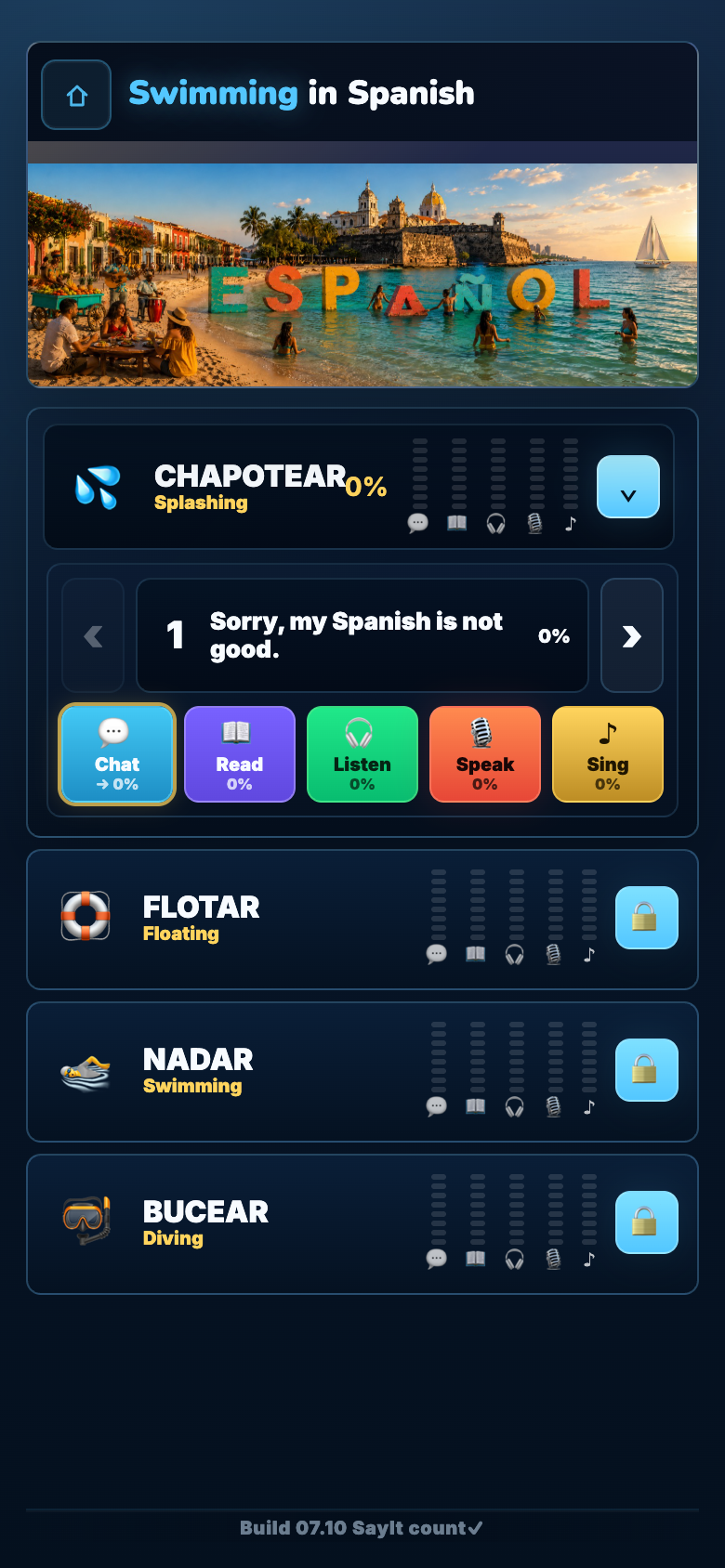
A clear path lowers the guesswork. Learners can see the next step without being managed by a teacher.
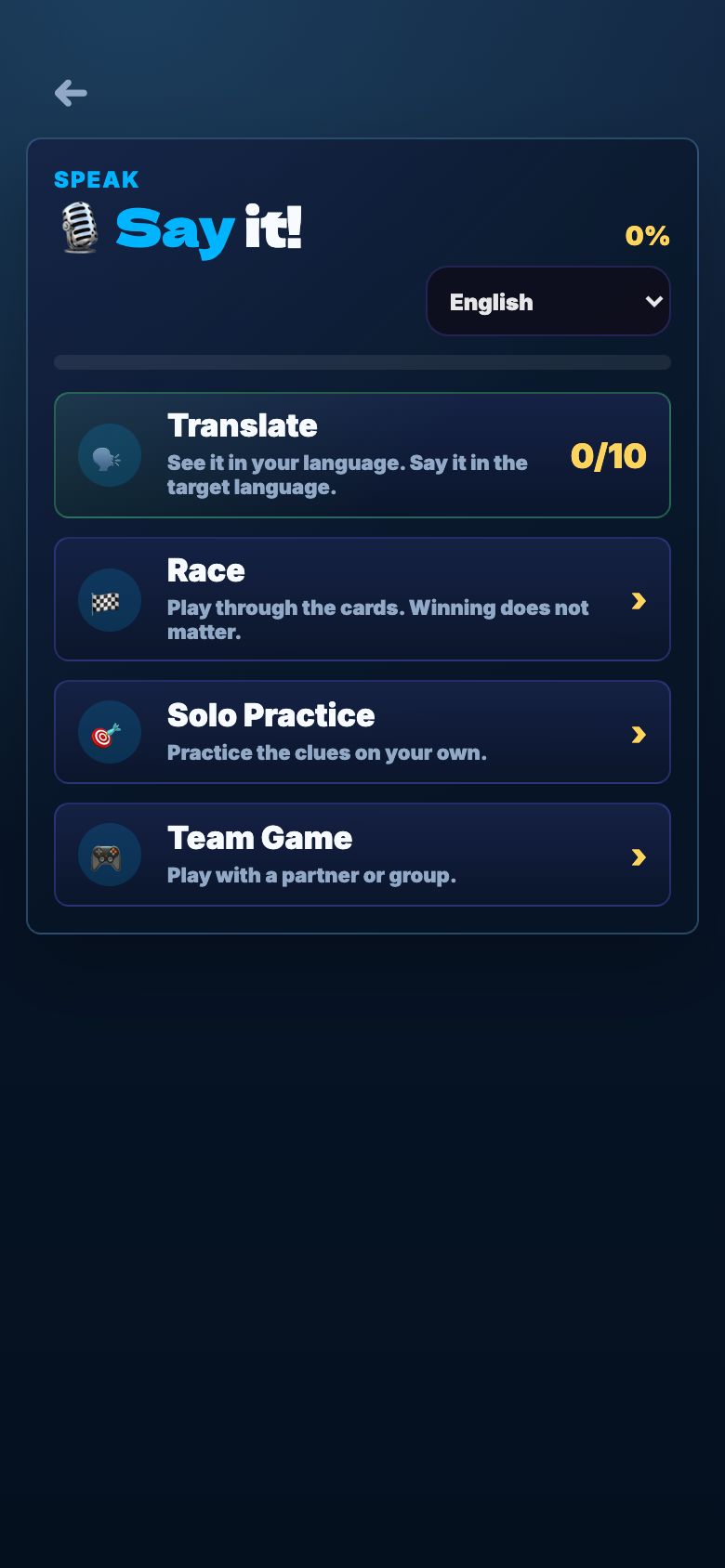
A speaking game that works alone, with a partner, or with teams, with enough help for beginners to join in.
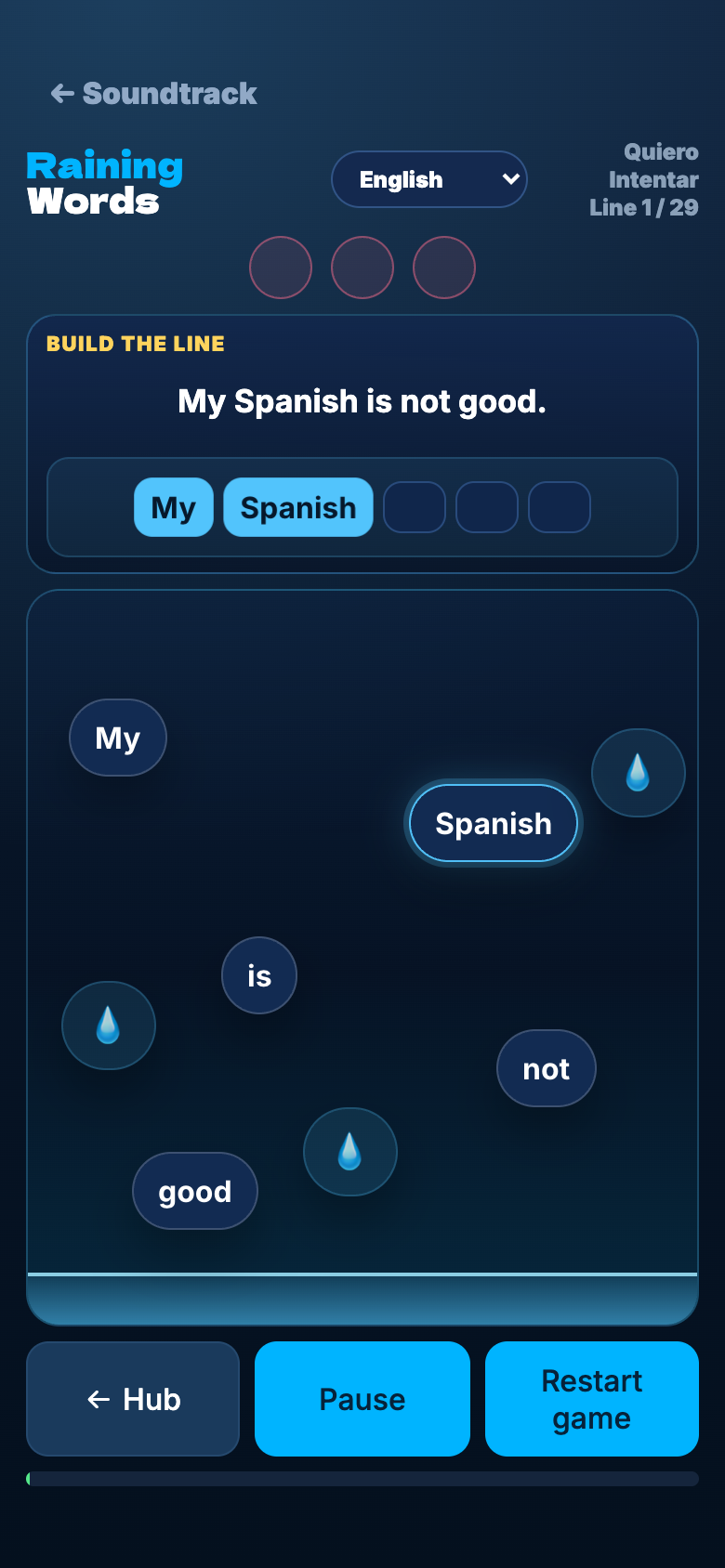
Fast recognition practice helps learners catch language in motion, not just study isolated words.
I built these games and have tested them in classrooms and with family. They are still beta versions.
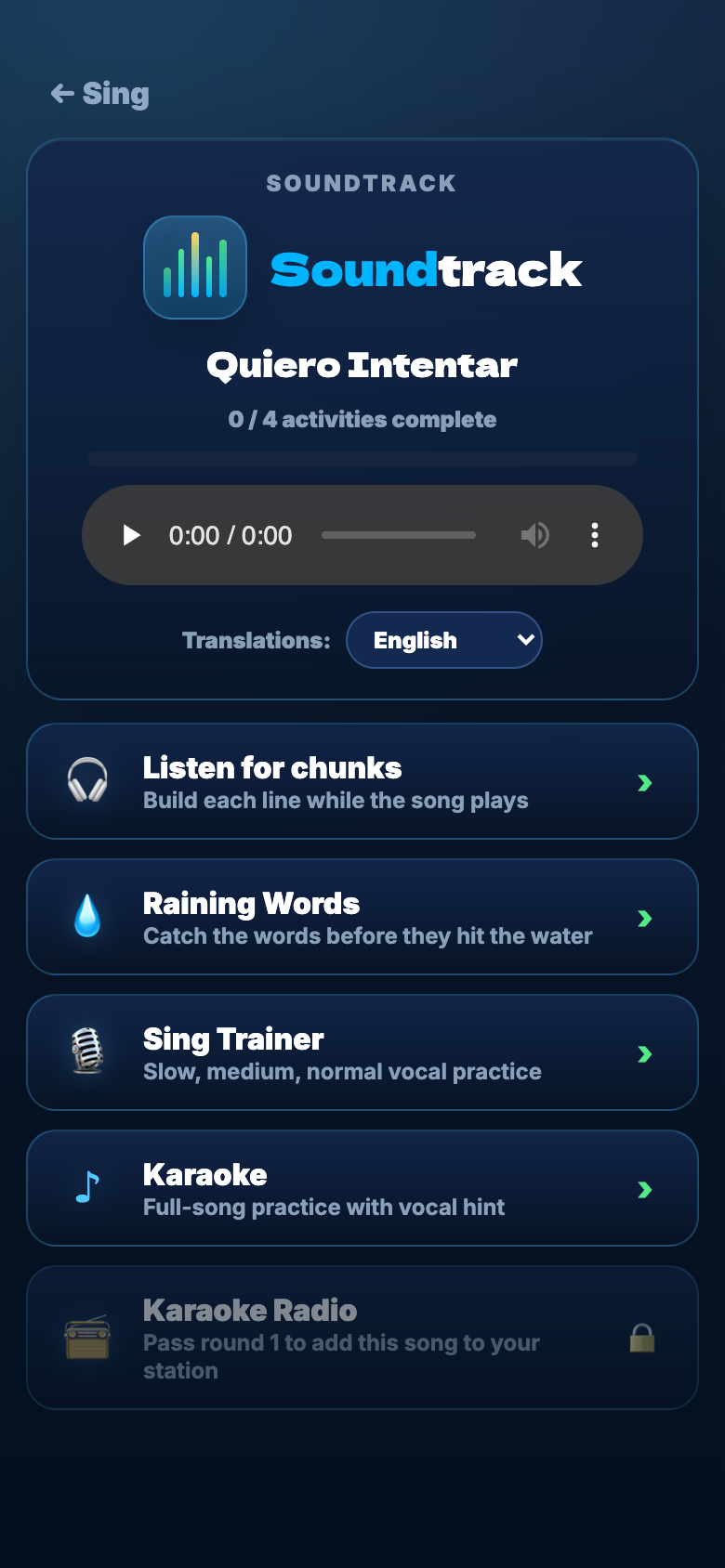
Rhythm gives repetition a pulse. Pronunciation and memory practice feel less forced.
Playable games - beta
Describe without gestures. Learners practice explaining when the obvious shortcuts are gone.
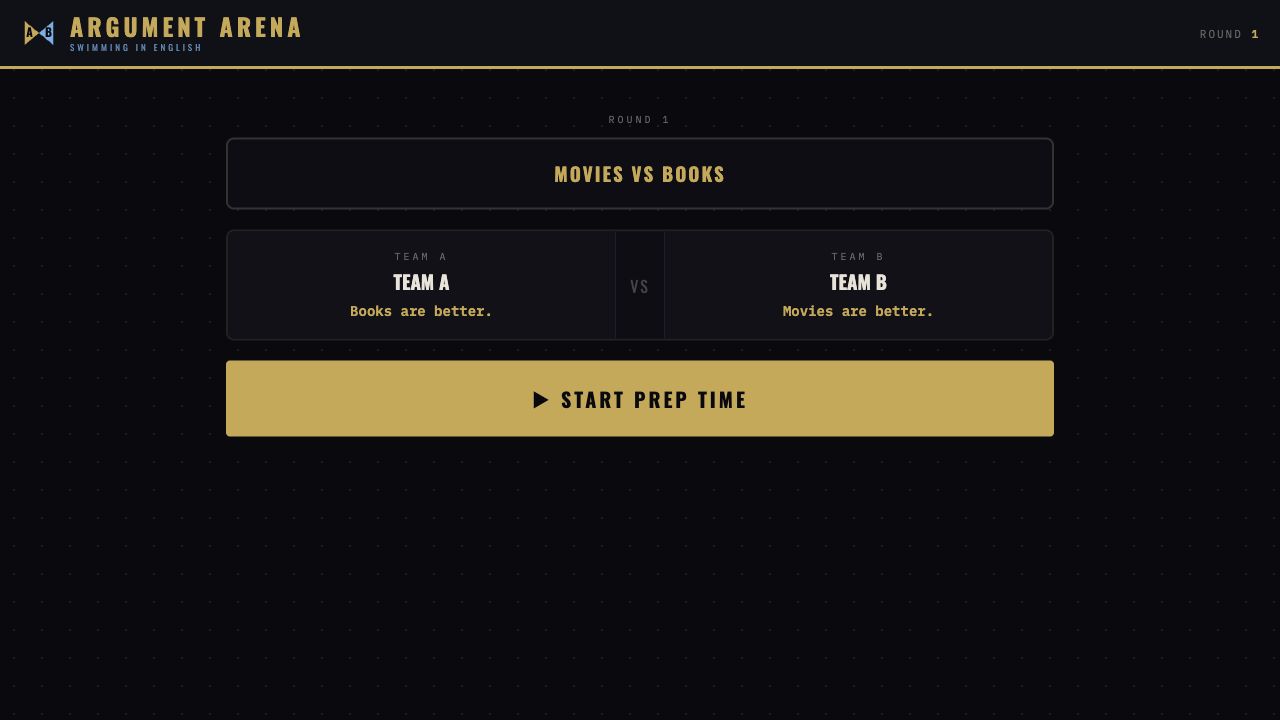
Teams take a side, prepare quickly, and practice giving reasons.
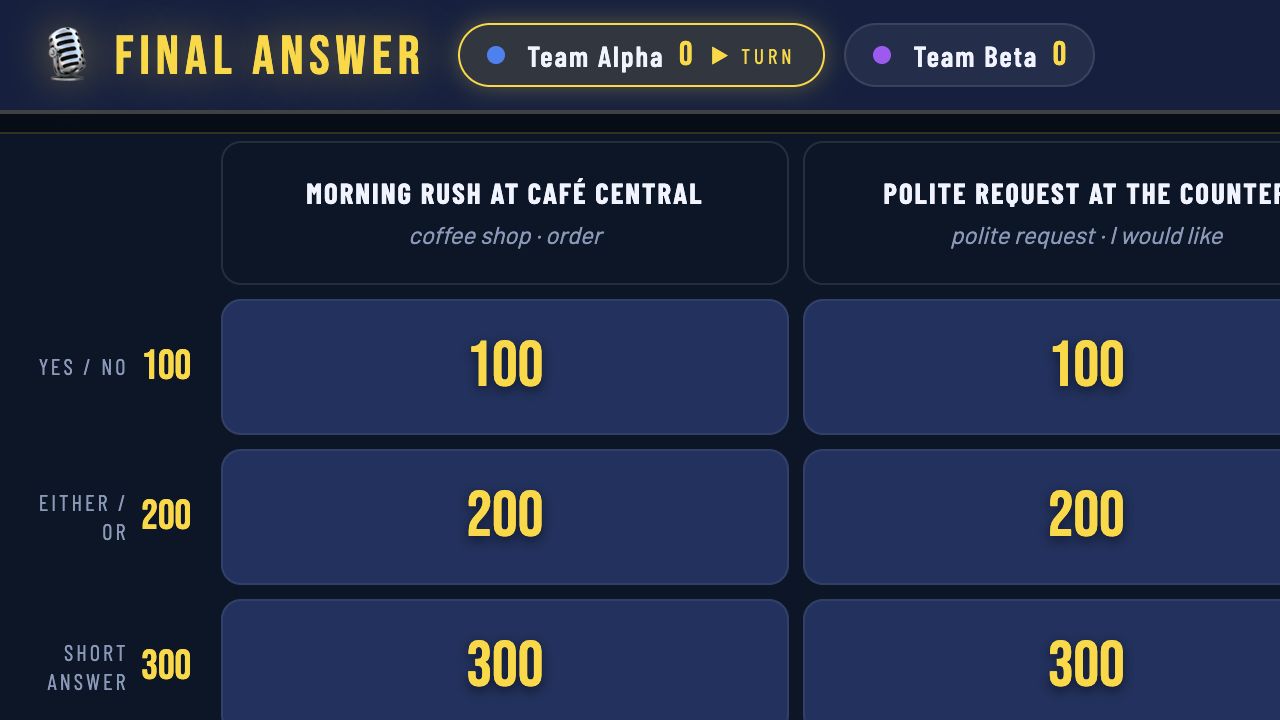
A can-do board that moves from quick answers toward fuller responses.
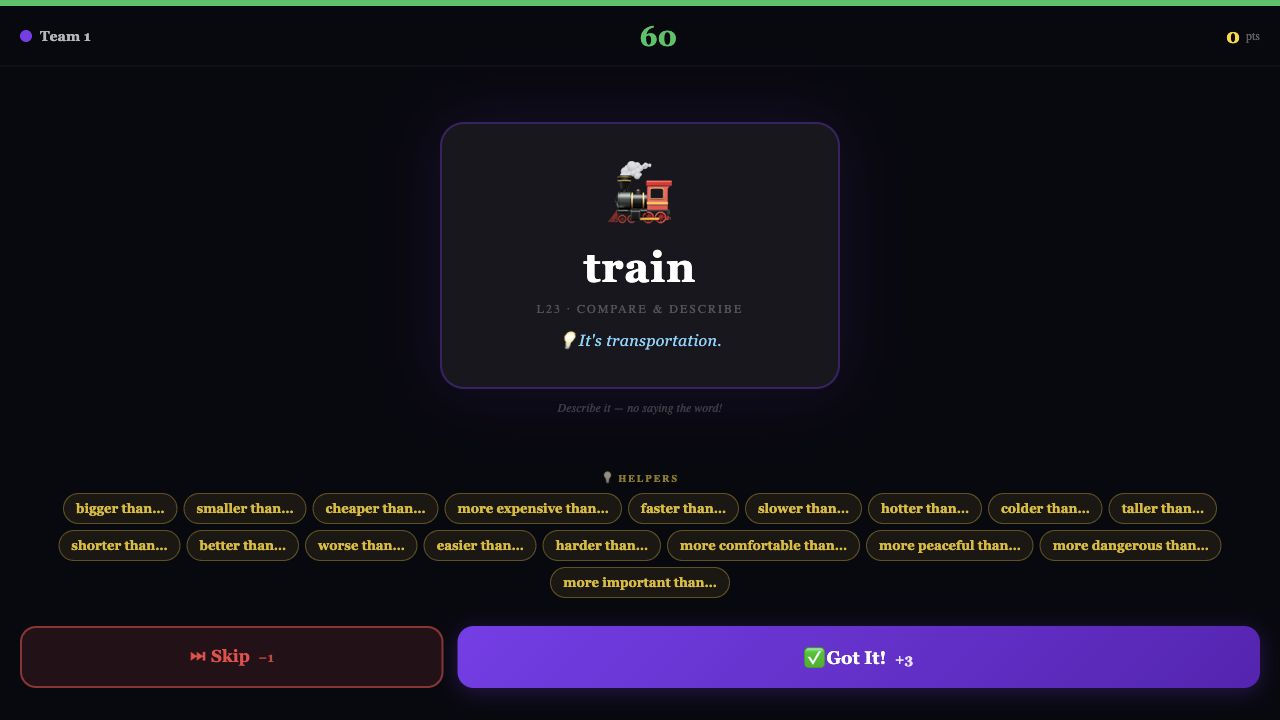
A clue-giving game for solo, partner, or team speaking practice.
The Throughline
That is the thread connecting my classrooms, curriculum work, language-learning media, technology experiments, and Swim In.